URANIUM · ARGENTINA
Uranium
$86.35USD/lb+2.49% · Apr 2026
Historical range: $7.10 (Jan 2001) — $136.22 (Jun 2007)Identified resources: 33,650 tU · Historical production: 2,600 tU
Projects21
Provinces6
Companies7
Advanced8
Resources · tU33,650
URANIUM PRICE · USD/LB
Monthly · 436 points · 1990–202635 years of price
URANIUM PROJECTS MAP
21 projectsUranium projects
Legend
- Feasibility
- Early exploration
- Prospection
- Advanced exploration
- Preliminary economic assessment
PROJECTS
21 projectsProject catalogue
Status
| # | |||||
|---|---|---|---|---|---|
| 1 | Amarillo Grande (Anit, Sta. Bárbara) | Río Negro | Advanced exploration | Blue Sky Uranium Corp. | Canada |
| 2 | Arroyo Perdido | Chubut | Early exploration | CNEA | Argentina |
| 3 | Cateos | Neuquén | Prospection | - | — |
| 4 | Catriel (Mari) | Río Negro | Early exploration | CNEA | Argentina |
| 5 | Cerro Solo | Chubut | Advanced exploration | CNEA | Argentina |
| 6 | Chihuidos | Neuquén | Early exploration | Blue Sky Uranium Corp. | Canada |
| 7 | Corcovo | Mendoza | Early exploration | Blue Sky Uranium Corp. | Canada |
| 8 | Don Otto | Salta | Feasibility | CNEA | Argentina |
| 9 | Hope | Chubut | Prospection | - | — |
| 10 | Huemules | Mendoza | Early exploration | Jaguar Uranium Corp. | Canada |
| 11 | Ivana (Amarillo Grande) | Río Negro | Preliminary economic assessment | Blue Sky Uranium Corp. | Canada |
| 12 | Kaia | Río Negro | Prospection | - | — |
| 13 | Lago Seco | Chubut | Prospection | - | — |
| 14 | Laguna Colorada | Chubut | Advanced exploration | CNEA | Argentina |
| 15 | Laguna Salada | Chubut | Preliminary economic assessment | Jaguar Uranium Corp. | Canada |
| 16 | Lucho U | Río Negro | Prospection | Lucero Claudio Guillermo-Unipersonal | — |
| 17 | Meseta Central | Chubut | Advanced exploration | UrAmérica Ltd. | United Kingdom |
| 18 | Meseta Sirven (Laguna Sirve) | Santa Cruz | Early exploration | CNEA | Argentina |
| 19 | Sierra Cuadrada | Chubut | Prospection | CNEA | Argentina |
| 20 | Sierra Pintada | Mendoza | Feasibility | CNEA | Argentina |
| 21 | Sofia | Santa Cruz | Early exploration | Fomicruz S.E | Argentina |
PROJECT STAGE
Projects by status
21Projects by status
- Prospection629%
- Early exploration733%
- Advanced exploration419%
- Preliminary economic assessment210%
- Feasibility210%
FOREIGN TRADE
Imports vs exports
ImportsExports
19941999200420092014201920242026
FOREIGN TRADE
Flow by country
Year—
Show
Imports $538MExports $11.8MDeficit$527M
OriginsArgentinaDestinations
Canada$208M
Kazakhstan$133M
Namibia$61.1M
United States$48.1M
Sweden$30.9M
Czechia$21.7M
Brazil$12.2M
Russia$8.85M
Uzbekistan$7.97M
Nigeria$4.43M
$11.8MUnspecified
Origins
Canada$208M
Kazakhstan$133M
Namibia$61.1M
United States$48.1M
Sweden$30.9M
Czechia$21.7M
Brazil$12.2M
Russia$8.85M
Uzbekistan$7.97M
Nigeria$4.43M
Destinations
Unspecified$11.8M
NUCLEAR FUEL CYCLE
From deposit to power generation
A uranium molecule travels the whole cycle: from deposit to mine, to mill, to conversion, to fuel and to the reactor.
Argentina produced 2,600 tU between 1952 and 1997. Today the uranium for its nuclear plants (Atucha I, Atucha II, Embalse) is imported, while 33,650 tU remain in identified resources.
STEP 1 · 12
Geological formation
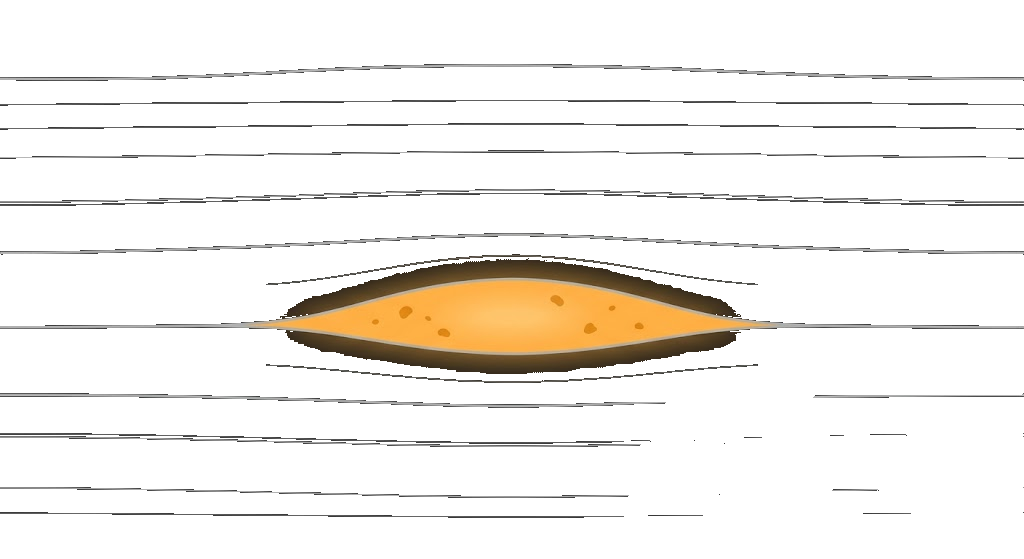
STEP 1 · 12
Geological formation
Uranium occurs in the Earth’s crust at 2–4 ppm and concentrates into mineable deposits over millions of years.
KEY FACTCrustal abundance: 2–4 ppm uranium
IN ARGENTINA33,650 tU identified in resources in Argentina.
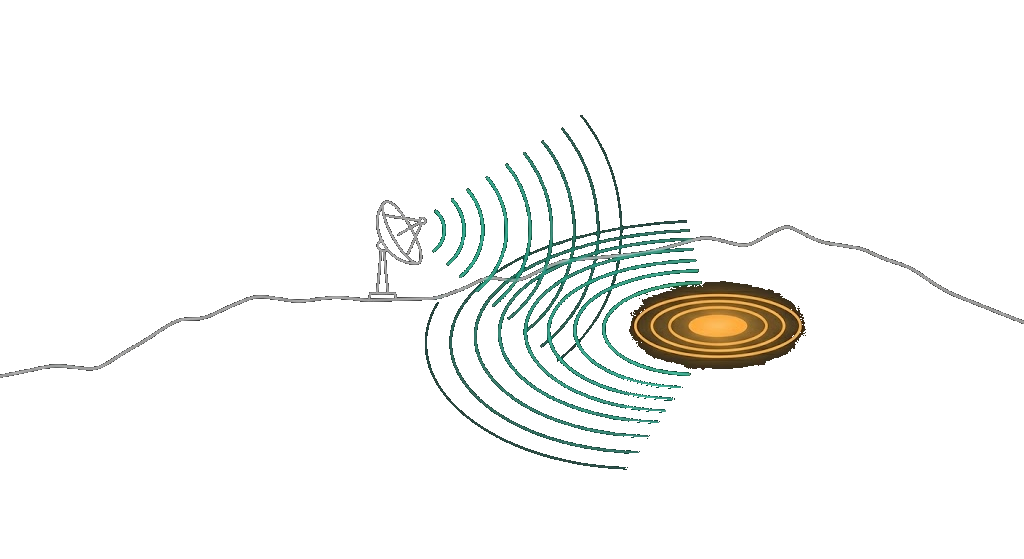
STEP 2 · 12
Prospecting
Airborne radiometric surveys, geochemistry and geological mapping outline targets before any drilling.
KEY FACTTechniques: airborne radiometry + geochem
IN ARGENTINACNEA runs prospecting across 6 provinces.
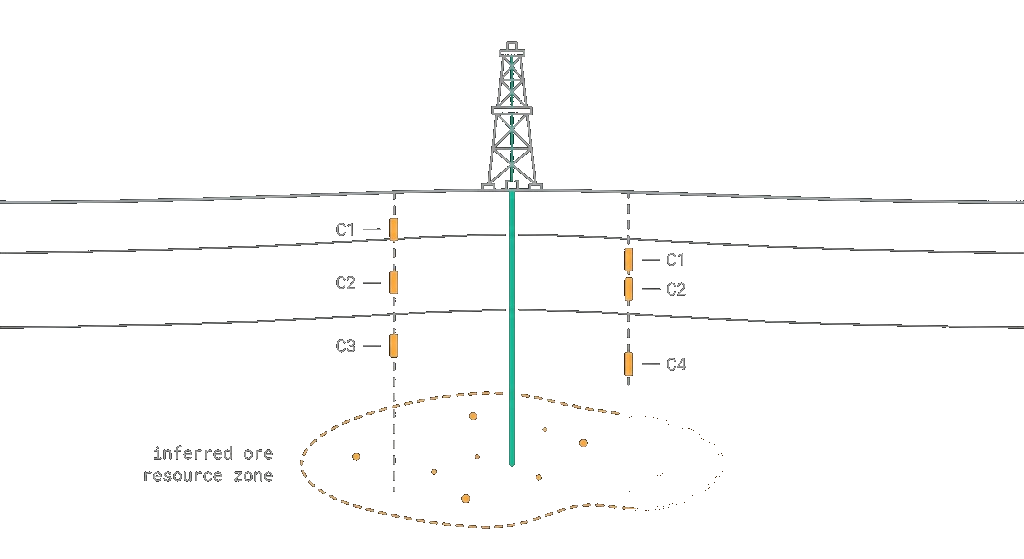
STEP 3 · 12
Advanced exploration
Drilling and systematic sampling let geologists estimate resources and their confidence level.
KEY FACTDrilling → resource estimation
IN ARGENTINA21 projects at varying levels of maturity.
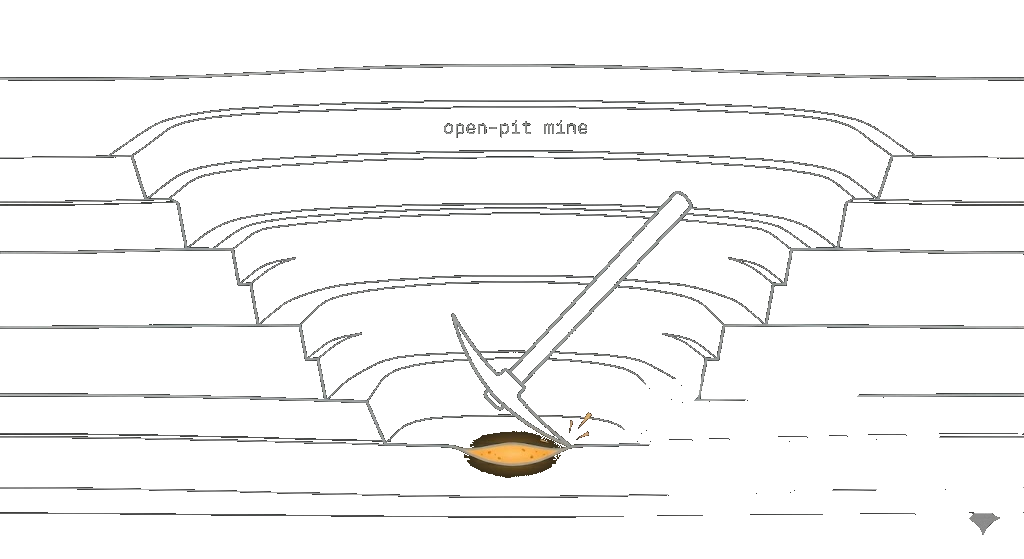
STEP 4 · 12
Mining
Ore is extracted via open pit (shallow deposits) or underground methods (deep deposits).
KEY FACTOpen pit vs. underground
IN ARGENTINASierra Pintada (Mendoza) and Don Otto (Salta), at feasibility.
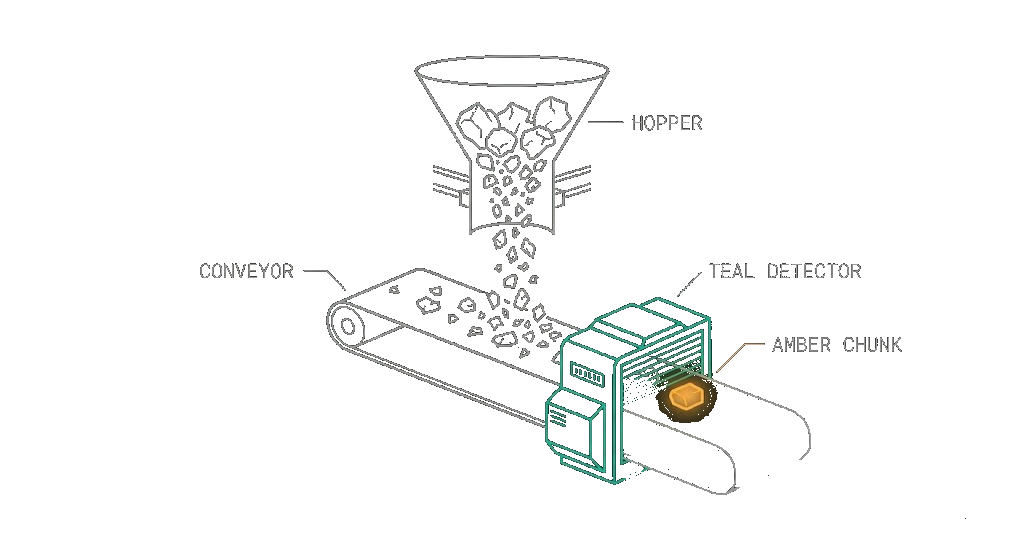
STEP 5 · 12
Crushing
Rock is reduced in size and a radiometric tunnel sorts material by its uranium concentration.
KEY FACTRadiometric ore sorting
IN ARGENTINAA radiometric tunnel grades ore before processing.
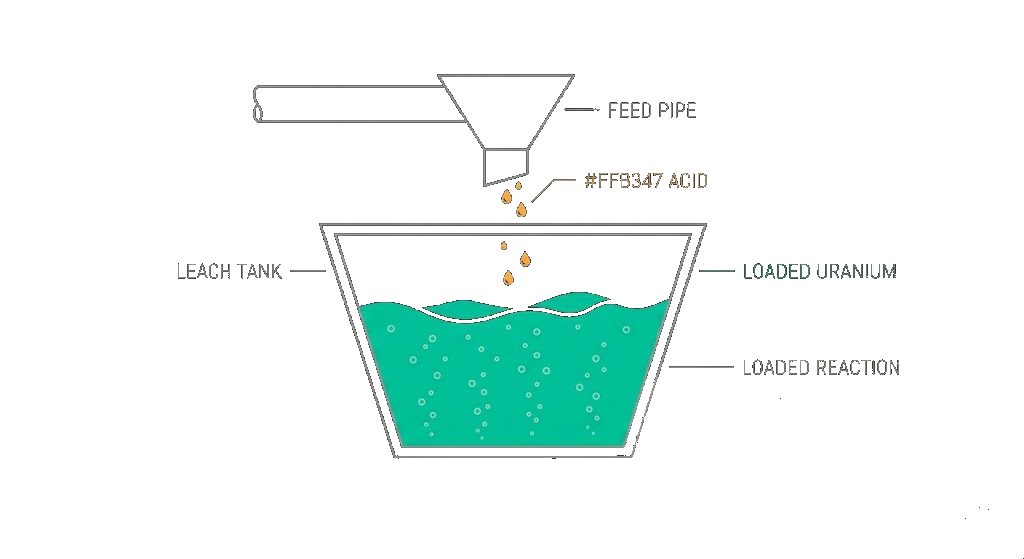
STEP 6 · 12
Leaching
Sulfuric acid (H₂SO₄) dissolves uranium and separates it from barren rock into a loaded solution.
KEY FACTH₂SO₄ separates U from rock
IN ARGENTINALined pads and process ponds.
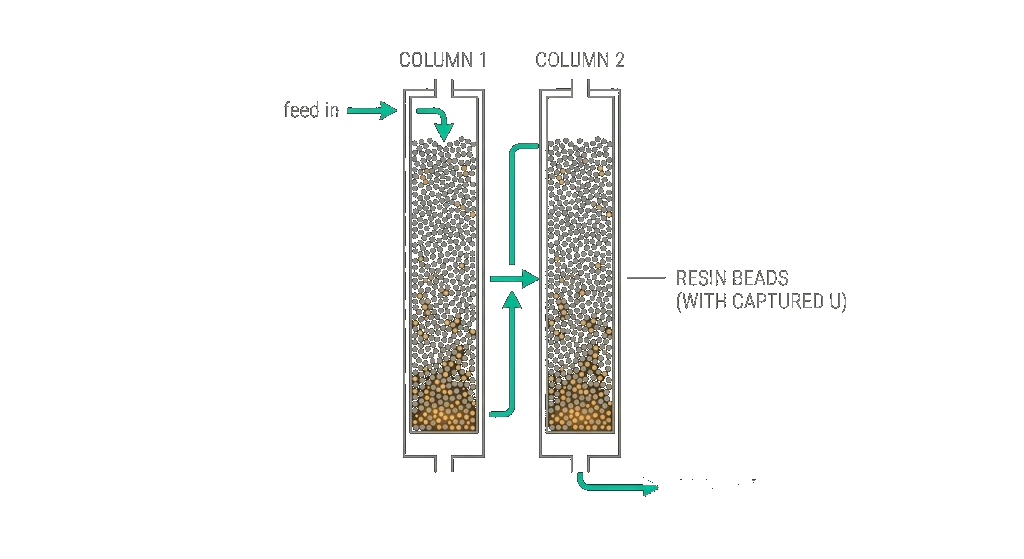
STEP 7 · 12
Ion exchange
Resins selectively capture uranium from solution and concentrate it.
KEY FACTResins concentrate uranium in solution
IN ARGENTINAIon-exchange columns at the plant.
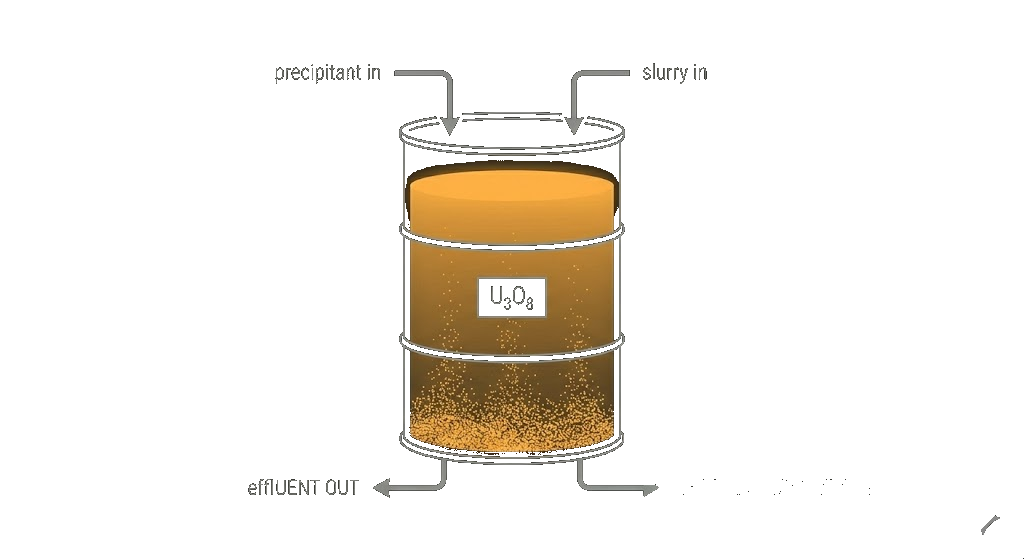
STEP 8 · 12
Precipitation
Adding ammonia precipitates uranium as U₃O₈ — "yellowcake", about 70% uranium.
KEY FACTYellowcake (U₃O₈): ~70% uranium
IN ARGENTINA2,600 tU produced historically (1952–1997).
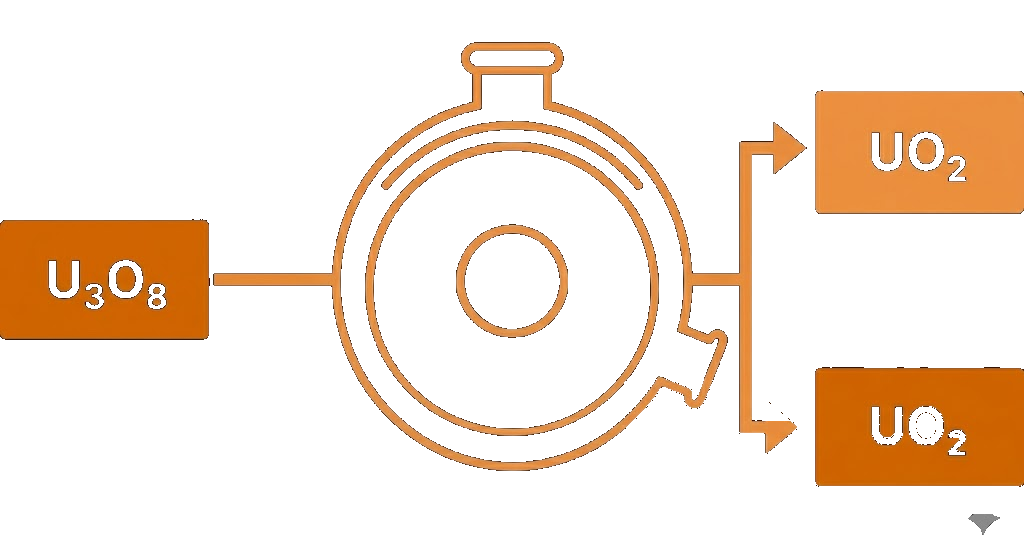
STEP 9 · 12
Conversion
U₃O₈ is chemically converted into uranium dioxide (UO₂), suitable for fuel fabrication.
KEY FACTU₃O₈ → UO₂
IN ARGENTINACarried out at CNEA’s conversion plant.
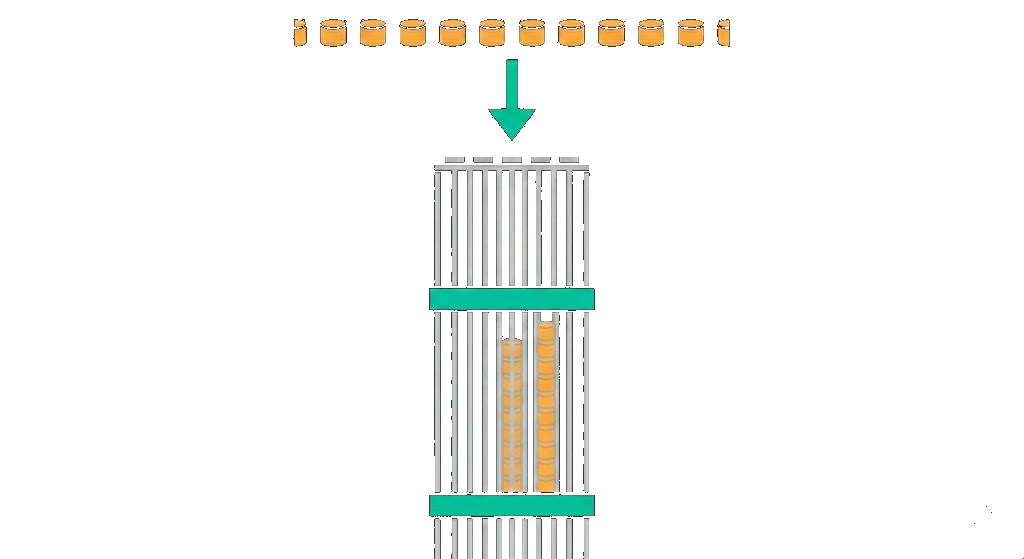
STEP 10 · 12
Fuel fabrication
UO₂ is pressed into pellets and assembled into zirconium-alloy rods that form the fuel elements.
KEY FACTUO₂ pellets in zirconium cladding
IN ARGENTINASupplies Atucha I, Atucha II and Embalse.
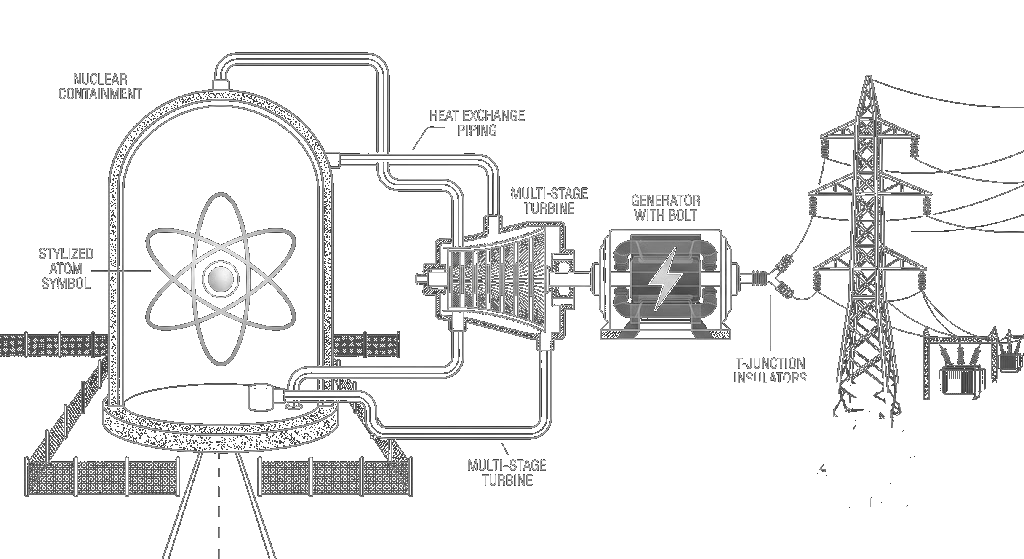
STEP 11 · 12
Power generation
Nuclear fission releases heat that raises steam and drives turbines to generate electricity.
KEY FACTFission → heat → steam → electricity
IN ARGENTINA≈7% of the SADI grid comes from nuclear.
STEP 12 · 12
Waste management
Spent fuel is safely dry-stored, awaiting final disposal.
KEY FACTDry storage + final disposal
IN ARGENTINA7 sites under active environmental remediation.
PROCESS DIAGRAM
The 12 stages
Hover a stage · click to jump
URANIUM IN ARGENTINA
Historical milestones
1946
First uranium deposit (Mendoza)
1952
First 4.5 t of yellowcake
1955
Huemul mine in Malargüe
1997
Sierra Pintada closes
2026
Projects reactivated
Today Argentina imports uranium for its three nuclear plants while developing new projects.
See active projects